Treatments
Every treatment, side by side
Written by Mustafa Ayan Fact-checked against university extension/IPM sources Last reviewed: September 19, 2026
No single method finishes a fungus gnat infestation alone — each one below reaches a different stage of the life cycle. The full guide explains how to stack them; each card here links to complete, step-by-step instructions.
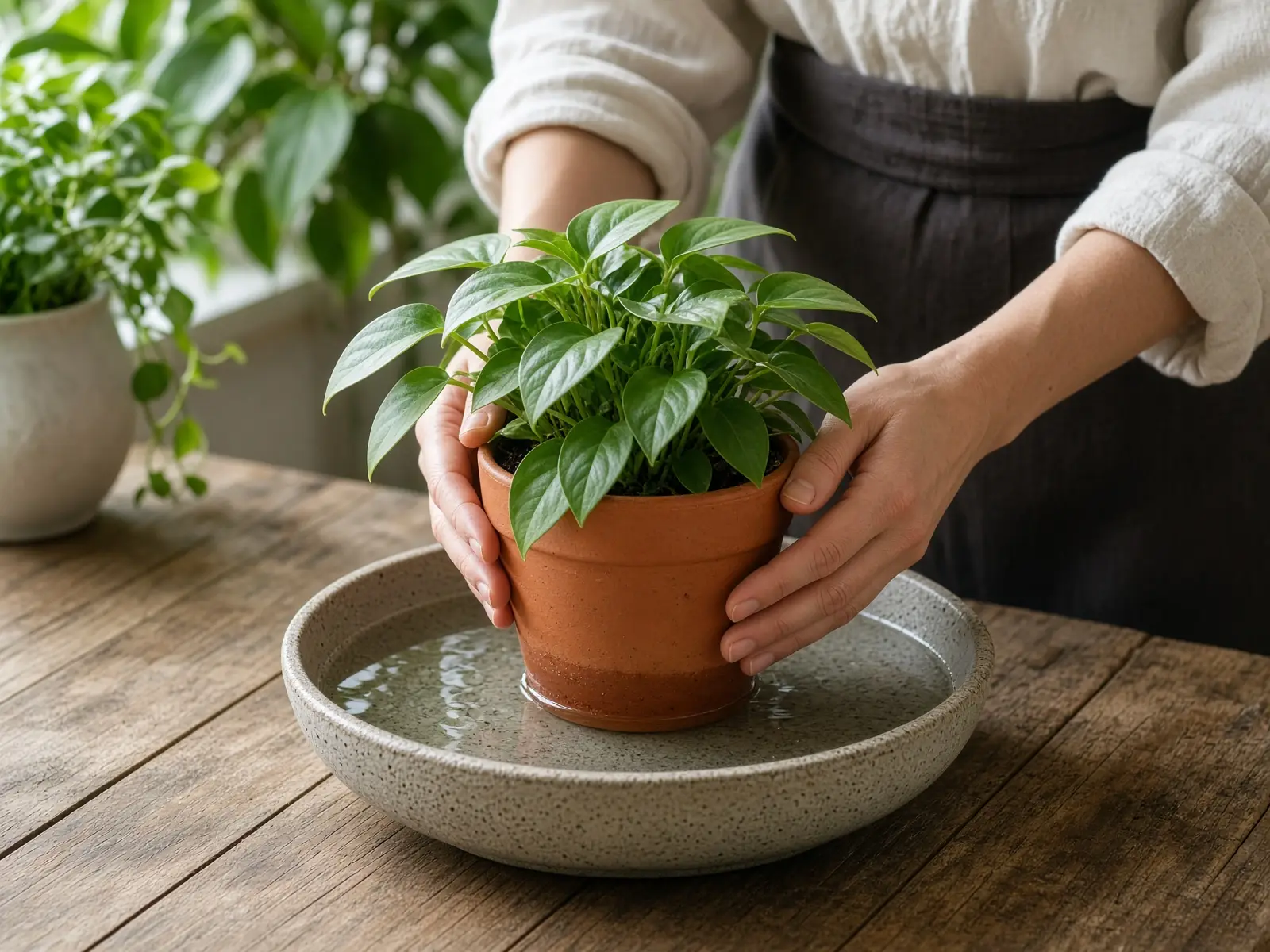
Most important · Ongoing
Let the soil dry
Fungus gnats breed in constantly wet mix. Let the top 1–2 inches dry between waterings and you remove their nursery.
Read the guide
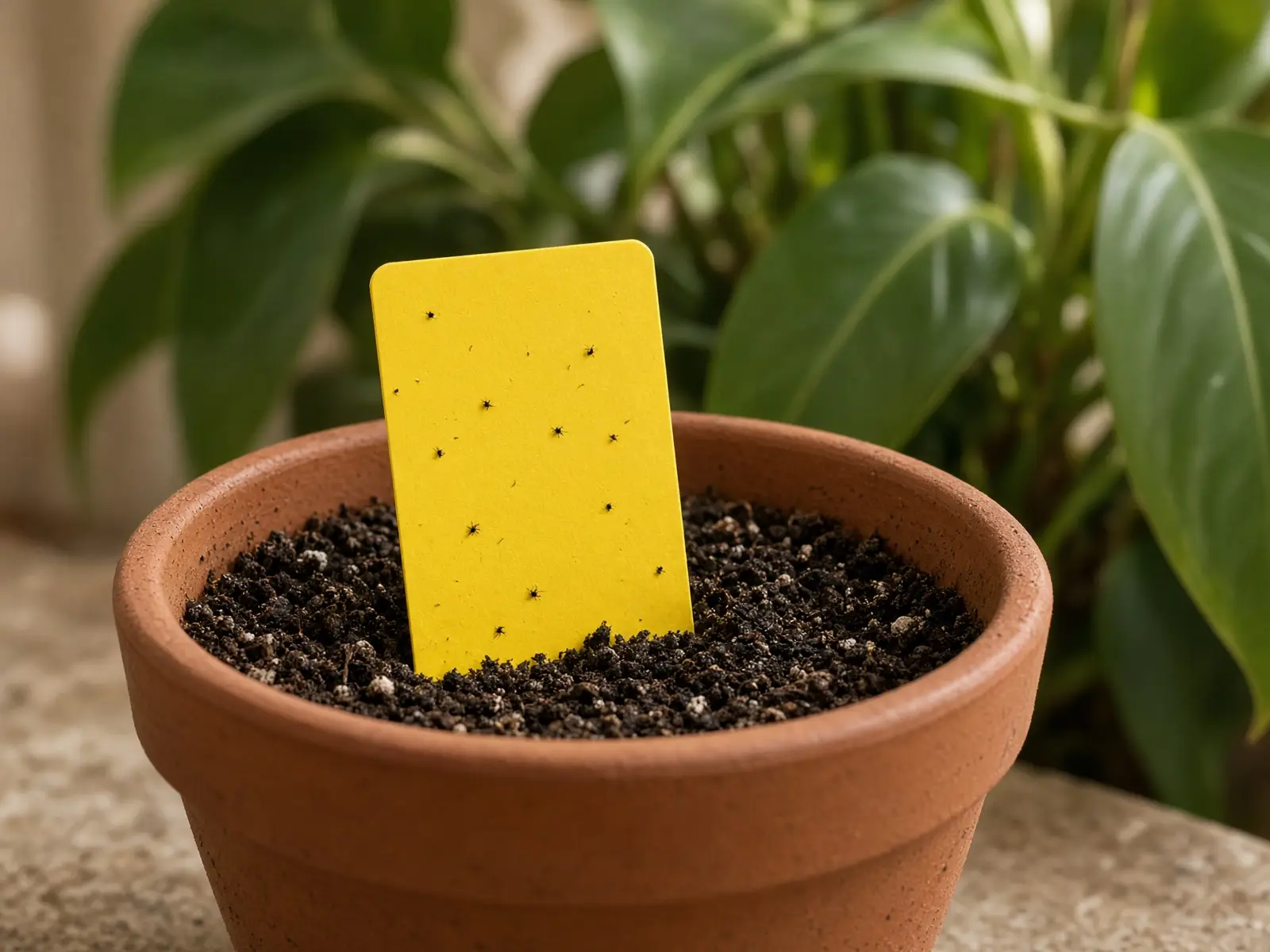
Adults · 5 minutes
Yellow sticky traps
Place yellow cards at the soil surface to catch egg-laying adults. Traps monitor the infestation — they do not finish it alone.
Read the guide
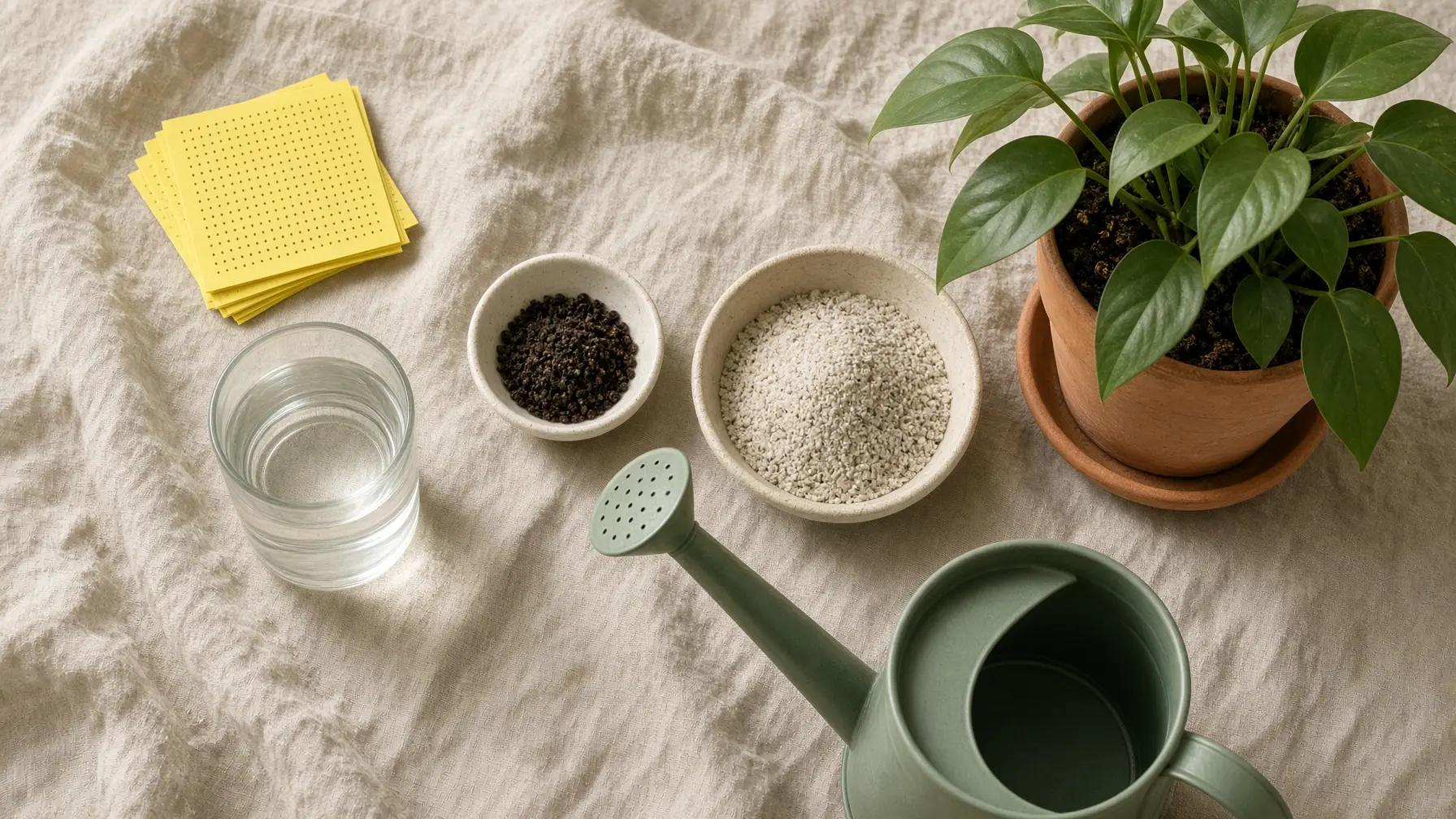
Best-supported larvicide · Per product label
Bti (Mosquito Bits)
Bacillus thuringiensis israelensis is a bacterium that specifically targets fly larvae. Use a product labeled for fungus gnats and follow its rate and reapplication instructions.
Read the guide
Optional — use cautiously · 10 minutes
Hydrogen peroxide drench
A diluted peroxide drench is a common household suggestion, but extension guidance on it is mixed. Not part of the default plan — read the cautions before using it.
Read the guide
Keep them gone · Habit change
Prevention that actually sticks
Bottom watering, a sand or grit top-dress, sterile mix, and empty cachepots. Keep monitoring for a couple of weeks after adults stop appearing.
Read the guide
Not sure where to start?
Start with identification, then find the likely breeding source, then manage moisture for that specific plant, then monitor with sticky traps — that alone resolves many light cases. Add a labeled Bti product if moisture control and traps aren't enough on their own, and troubleshoot if activity doesn't decline. The 7-Day Starter Plan turns that into a day-by-day checklist.