Eggs in wet mix
Females lay in moist organic soil. Eggs hatch in a few days.
A female fungus gnat can lay dozens of eggs in moist potting mix, and a new batch of adults can emerge every few days once a pot is infested — the cycle doesn't break on its own. This is how you break it.
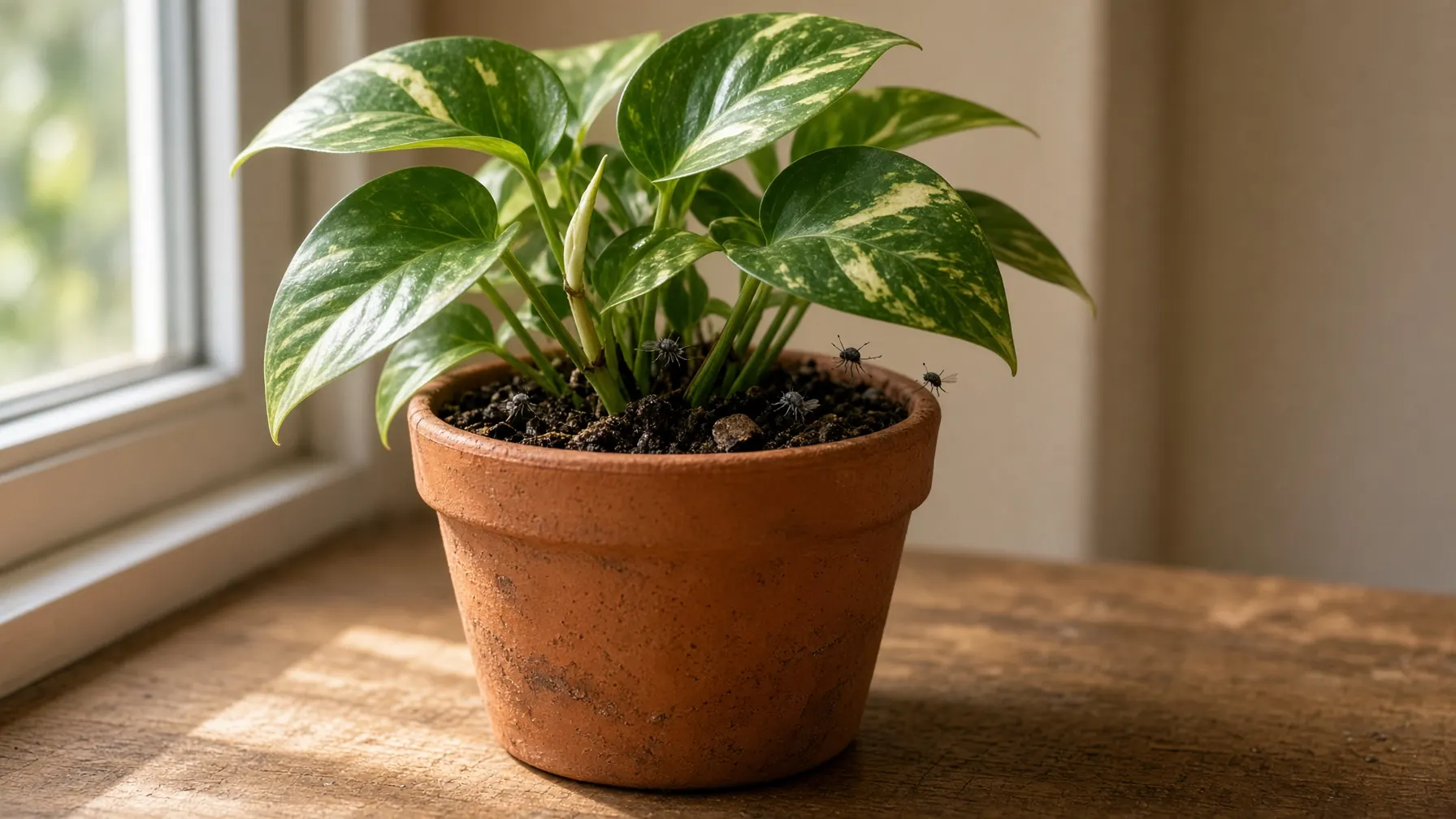
Is this you?
The whole fix
In that order. Skip identification or moisture and you're just delaying the next generation, not stopping it. The 7-day plan turns this into a day-by-day checklist.
See the full 7-day planConfirm it's actually fungus gnats, not fruit flies or drain flies.
Adjust watering so the mix dries appropriately for that specific plant — not the same rule for a succulent as a seedling.
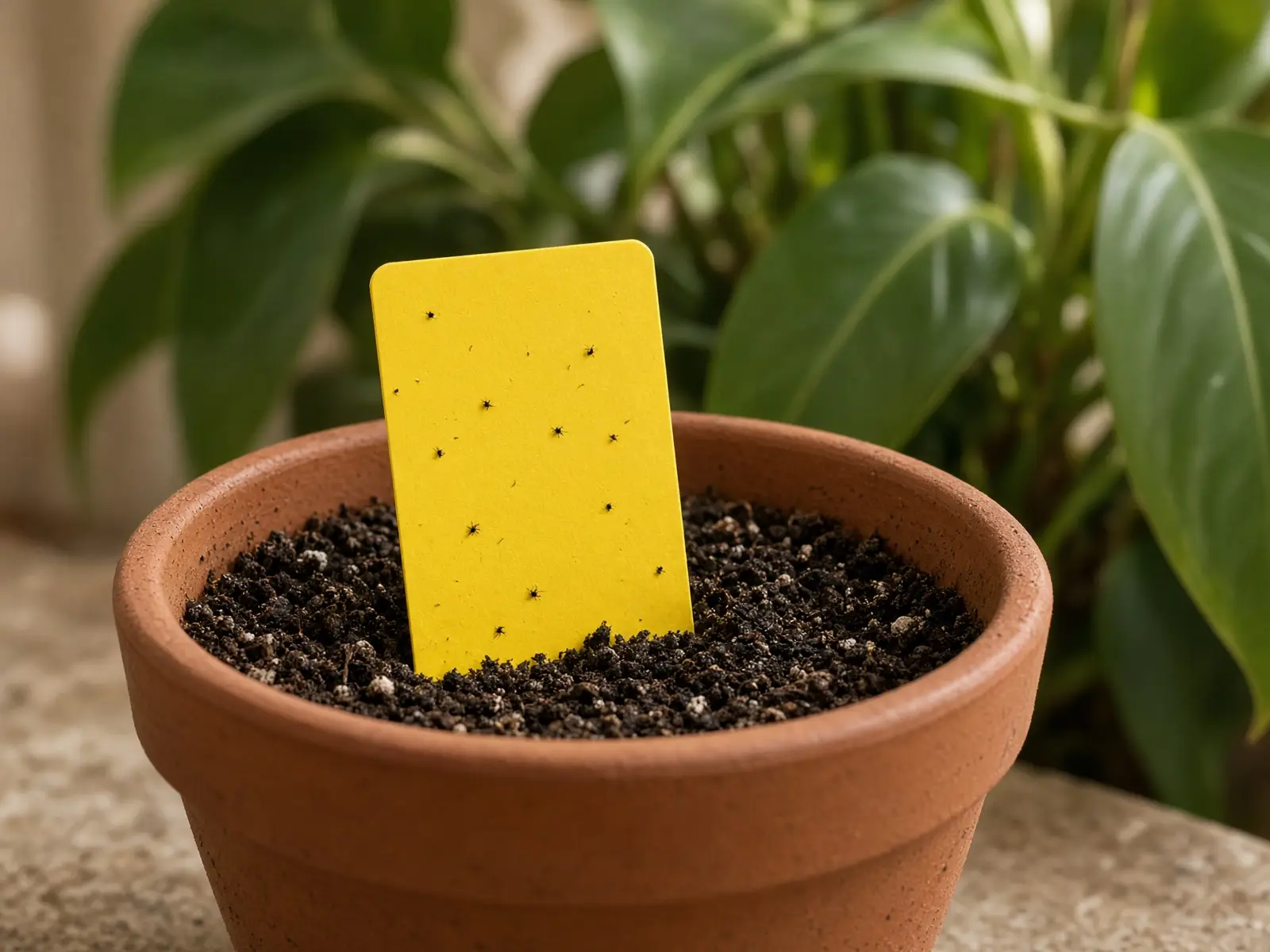
Stand yellow sticky cards at soil level to monitor and catch adults.
If soil moisture and traps alone aren't enough, use a Bti product labeled for fungus gnats, following the label.
First: confirm the pest
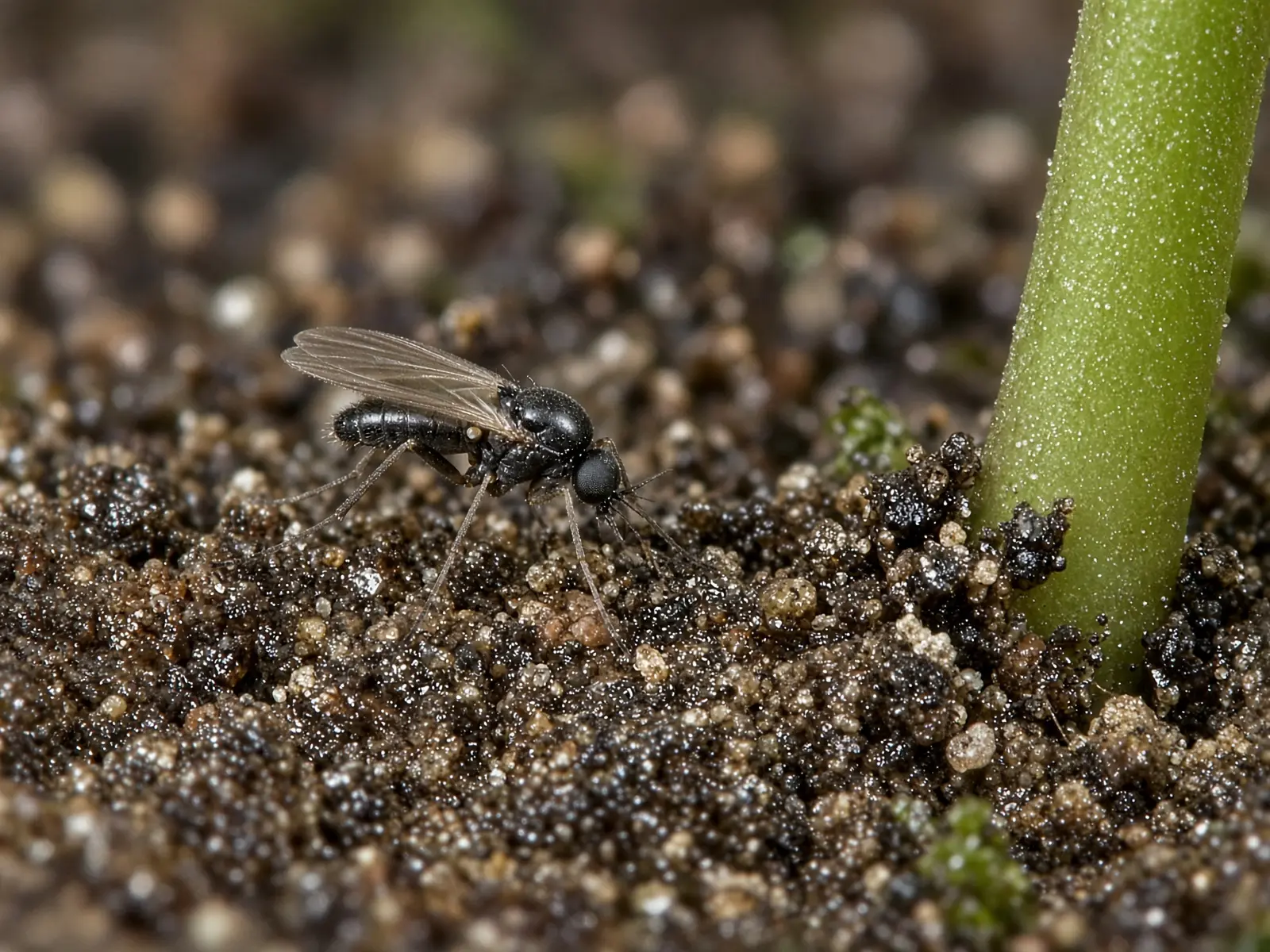
Fungus gnats live in potting mix. Fruit flies live in kitchens. Drain flies live in pipes. Treat the wrong one and you're back here in seven days. Three questions will sort it — or see the full comparison.
Four quick questions
Why they keep coming back
Full stage-by-stage detail: the fungus gnat life cycle. Wondering how they got here at all? See the causes.
Females lay in moist organic soil. Eggs hatch in a few days.
White maggots with black heads feed for about two weeks. Traps miss them completely.
Adults are weak fliers. Kill them and the next wave still emerges from the pot.
Methods that work
Most important · Ongoing
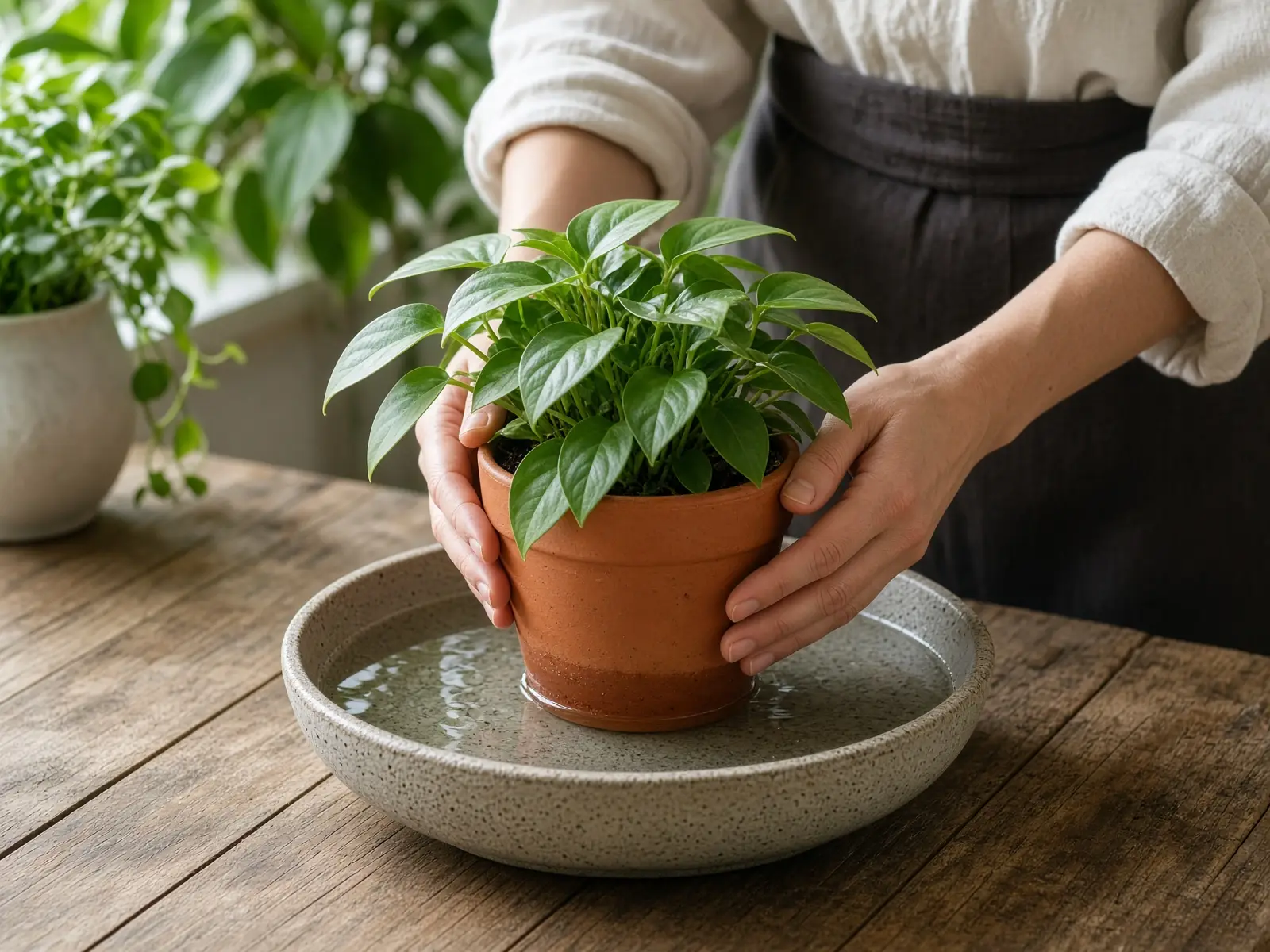
Fungus gnats breed in constantly wet mix. Let the top 1–2 inches dry between waterings and you remove their nursery.
Adults · 5 minutes
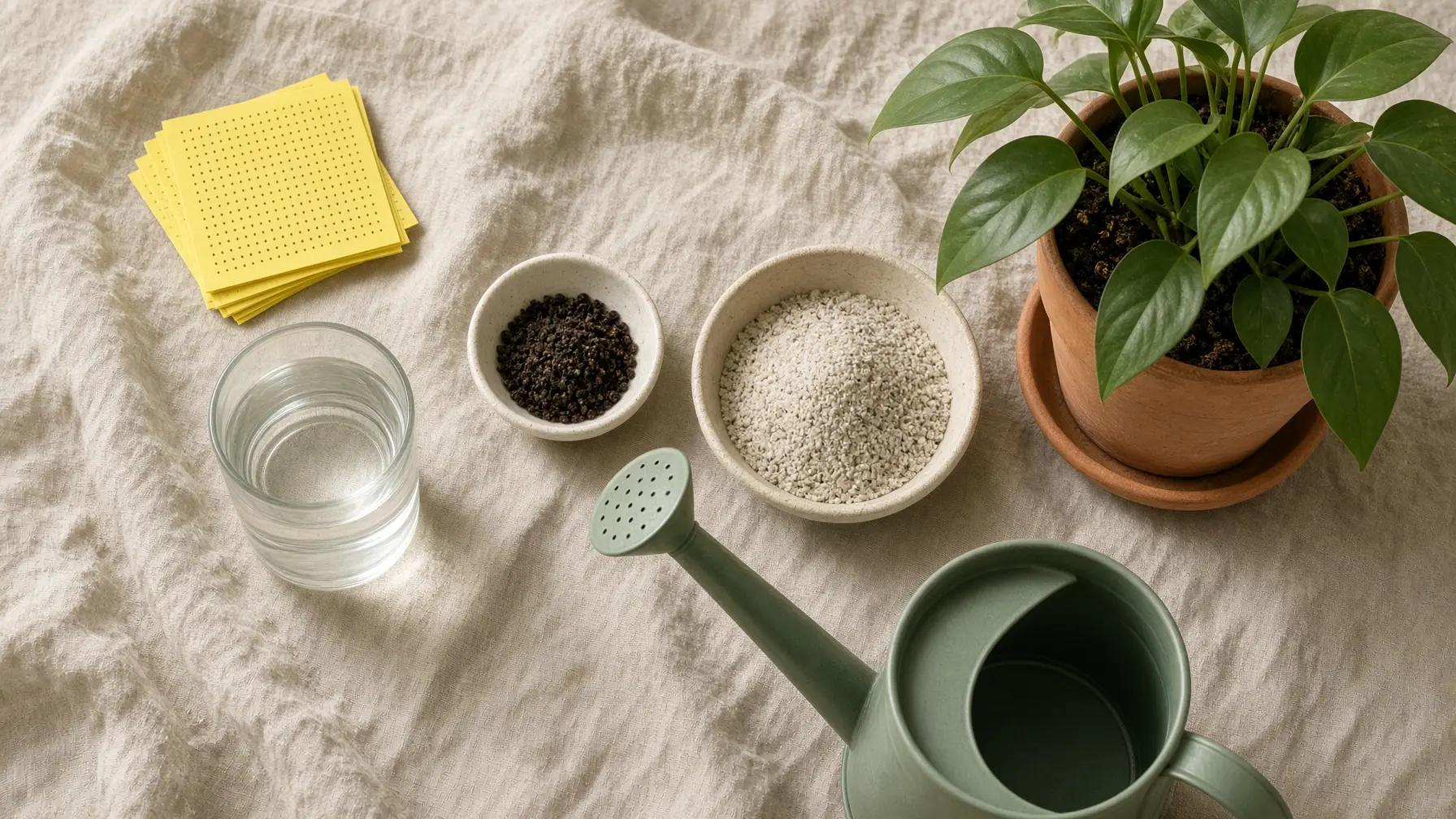
Place yellow cards at the soil surface to catch egg-laying adults. Traps monitor the infestation — they do not finish it alone.
Best-supported larvicide · Per product label
Bacillus thuringiensis israelensis is a bacterium that specifically targets fly larvae. Use a product labeled for fungus gnats and follow its rate and reapplication instructions.
Optional — use cautiously · 10 minutes
A diluted peroxide drench is a common household suggestion, but extension guidance on it is mixed. Not part of the default plan — read the cautions before using it.
Keep them gone · Habit change
Bottom watering, a sand or grit top-dress, sterile mix, and empty cachepots. Keep monitoring for a couple of weeks after adults stop appearing.
Prevention
Bottom watering keeps the surface drier so females have nowhere useful to lay.
A half-inch of coarse sand or grit after larvae are down makes egg-laying harder.
Nursery mix is a common hitchhike. One sticky card for a week before they join the shelf.
Still wondering
They are tiny dark flies that look like mosquitoes, with long legs. They hover around houseplant soil and often fly up when you water. Fruit flies hang around kitchens and produce. Drain flies look fuzzy and sit on bathroom or kitchen drains.
No. Adults are a nuisance in the air and on windows. The damage is underground: larvae feed on fungi, organic matter, and sometimes fine roots — especially on seedlings.
You may see fewer adults within days once moisture is managed and adults are being trapped, but complete control often takes several weeks, longer for a heavier infestation, because eggs and larvae keep hatching on their own schedule. Keep monitoring after adult numbers fall — don't assume it's over the moment things look clear.
Vinegar traps catch some adults but are built for fruit flies. Cinnamon is a mild fungicide and may help a little. Neither replaces dry soil plus a larval treatment. Use them as extras, not the plan.